Latest Entries »

With Moderation

It’s the end of March, and that means that even as winter leaves, convention season shall soon be upon us.
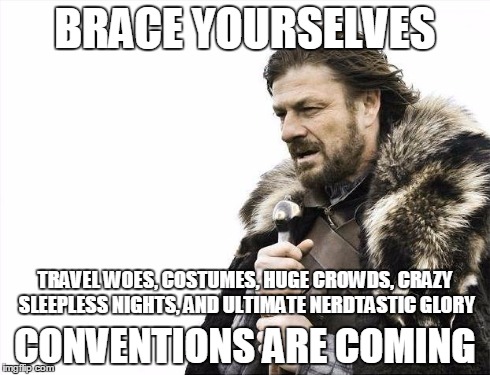
Conventions are coming

Right now, I’m only planning on AwesomeCon and BrickFair, both local events. I’ve been invited to speak at AwesomeCon (though I don’t know which of my proposals they’ll pick; their panel schedule has been delayed); but while BrickFair is awesome, I won’t be there as an editor, writer, or anything but a guy who likes art made out of Lego bricks.

may be at the Catholic Writers Conference (in New Jersey) and possibly at Capclave (DC area again), but I’m not certain. I’ve been invited to speak at the former, but it may conflict with another obligation; and Capclave is just too far out to plan right now. I originally wanted to go to DragonCon again as well, but my schedule just got too full for that part of the year.

Regardless, I wanted to share some tips for one of the things I do well at conventions: how to be a panel moderator. View full article »
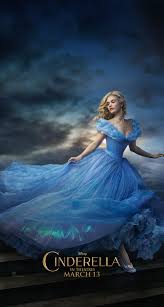
Cinderella

Editor’s Note: Lori wanted to review and analyze Cinderella, so here she is in her second guest blog. Enjoy!

~ Matthew Bowman, Supreme Editor Monkey at Novel Ninja.


CinderellaI’ll say it right at the outset: Cinderella is one of the best movies I have seen recently.
Now, after I reviewed Old Fashioned — a movie I wanted to like — Matthew and I were both told on Facebook that we’re not qualified to review rom-coms, so I guess I’m not qualified here either. Or the haters can just go jump in the nearest lake.

The movie is visually beautiful, with a bare minimum of CGI.  The music is compelling, the acting is quite well done and convincing, the humor is tasteful and just enough to make the story light and pleasant (but not enough to make it silly) and the story is almost perfect.

Comparing this version to the original Disney Cinderella (1950), this one is superior in every way, and not just because it is a modern film with real actors.  The original Cinderella is a child’s movie, with a child’s plot.  There is no real development of anyone’s character, including Cinderella’s, the prince is barely in the movie at all, and most of the screen time is spent with Cinderella’s talking and singing animal friends.  This is not a bad thing in itself; I loved Cinderella as a kid (but not as much as Beauty and the Beast or The Little Mermaid).  It’s not a bad story; it just could have been so much better.

Fortunately for fans of the fairy tale, now it is.

I don’t think any SPOILER ALERTS are necessary here.  Even if you haven’t seen this version of Cinderella (you should do so as soon as possible), we all know the story, and we all know how it ends. View full article »

Flash Backward

What’s this? I haven’t done a dedicated blog post on The Flash yet? Well, after the latest episode, I think it’s time to fix that.

For me, despite the significant lack of Felicity Smoak (beauty, brains, and geeky quirky humor — yup), The Flash has been better than Arrow. That’s not because Arrow is grimdark, but more because teamwork and character interaction on that show is just slightly too soap opera for my taste, at least when there’s an alternative like Flash around. Flash is serious when appropriate, but its true strength is in how quickly it built a team for people to care about. Arrow is built around a loner, and that’s used as a source of conflict just a little too much.

(I also enjoy how the police are actually useful in Flash stories, which isn’t something you normally get in superhero fiction. My brother is a cop, so that’s something that stands out to me.)

The one major thing I don’t really like about the show is that, frankly, I don’t like Iris. From day one, she’s just not struck me as someone good for Barry. Plus, there’s the whole foster sister thing. That’s a bit of a squick factor for me. That meant I was really glad when Linda Park showed up. I knew they were just going to use her as a means to get Iris jealous (and bingo, I was right), but they work together far better than Barry and Iris. I don’t know how much of that is the actors, but Barry and Linda have been meshing so well, and think so much alike, that I was really hoping we’d just go for that rather than the comic book continuity.

Of course, before Linda showed up, I was rooting for Barry and Caitlin. Okay, I admit it. I have a thing for geek women. Shocker!

Mind you, I have to admit that Iris was feeling a little bit more natural in the most recent episode, “Out of Time.” Which brings me to the spoiler part of this post, so if you don’t want any, leave now.  View full article »

Building Your World: Scale

When figuring out where to set your story, one of the simplest things to do is pick how far your story extends. Does it take place entirely in one town? Does it span an entire galaxy?

There has been an increasing trend toward larger and larger settings in the last few decades, though that trend may be reversing now. It seems as if, as our perception of our own world increases and our ability to get from place to place becomes easier, we seem to think that the same should be true even in a medieval fantasy setting. Lately, though, I’ve been coming across more and more stories that detail smaller areas, as if authors are realizing that — like with the real world — “flyover country” actually contains some interesting stuff. You can set a lot of stories in one small area.  View full article »

The Accidental Alchemist

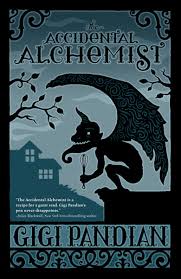
I’The Accidental Alchemistve always had a fascination with how people explain bumps in the night. It started when my (military) family moved to Rome, Italy, when I was nine. I spent three years in the Eternal City, where I was surrounded by references to mythology both Greek and Roman, Etruscan and Egyptian. It moved on to still other cultures, where I compared their beliefs and looked for commonalities. The fact that others had come to the same conclusions before me wasn’t a disappointment. It told me I wasn’t alone in this fascination.

A year into my stay, I had also gained a fascination for science, and the subjects of history, science, and mythology mixed around in my head as I also started reading more and more science fiction and fantasy. I loved it. So very many fun things, all of which could run into each other at different angles, combining to form new stories, yet with familiar elements. It was like playing new games with old friends.

That only deepened as I grew older, and I found myself looking at alchemy in that tripartite way. I looked at it as a mythology, bound up in how people thought the world worked. I studied it as the precursor to chemistry, and the crazy uncle of physics. I delighted in the way the exploration of alchemy was so tied up in historical events, yet not quite so obvious in its connection, and therefore requiring careful exploration. It was a mythology not as glamorous as the gods of Mount Olympus; it was embarrassing to many scientists; and it was dismissed as irrelevant by most historians. I thought it was fun.

So, when I spotted The Accidental Alchemist, by Gigi Pandian, and read a review that mentioned the detailed research the author had undergone to write it, I thought it worth a try. And boy, am I glad I did. View full article »

Coauthored Books

CO_Authoer-ImageA lot of fans have dreams. Meeting their favorite author. Getting sneak peeks at an anticipated book. Getting two favorite authors to team up — oh, yeah, that’s one that will get people excited.
But that brings up a can of worms that might not be obvious at first look. Who’s ultimately in charge? If there are disagreements, how do they get resolved? Whose name comes first on the cover? If it’s not a 50/50 royalty split, why? And how is that determined?

This is something that shows up a lot in academia, because whomever shows up first in the list of authors has pride of place (unless possibly, but still often the case when, it’s just determined by alphabetical order). In a multi-author academic paper, the first name is not always given to the one who did the most work, but rather the one who will get the most notice and bring the most credibility to the findings. The last person on the list might well have been the one who did the lion’s share, but the first name usually gets most of the credit.

Unfair? Well, there’s a reason for this arrangement.  View full article »

Another geek icon has left us. Terry Pratchett, best known for his Discworld series, died today at just 66.

I have to confess, I wasn’t a fan. I wasn’t able to get into the Discworld books. That doesn’t mean I can’t recognize how much influence he had on the genre. He melded humor into the fantasy genre so seamlessly that, to be honest, he makes Douglas Adam’s Hitchhiker’s Guide seem clunky. Just because I wasn’t engaged by the story of The Colour of Magic doesn’t mean I couldn’t tell he had talent.

Yes, I’ve been told I should try another one of his books. I just haven’t gotten around to it. When people tell me this or that book is better to start with and start arguing with each other, I tend to move on to another series.

I could also sympathize with him because of the physical issues he was dealing with. My condition is nowhere near as debilitating, but requiring assistance to just live is . . . well, a difficult adjustment. And he kept at it; he continued writing via dictation, and kept attending conventions until last year. That’s impressive, and definitely the sign of someone who loved being a storyteller.

Godspeed, Sir Pratchett.

Some years back, I evaluated a manuscript for a publisher. It was a Civil War historical mystery novel, and the Civil War is not exactly my area of expertise. Yet I sent the chief editor seven pages of notes on the book’s historical inaccuracies and plot holes. The editor later told me that, while reading through those notes, she turned to someone else in the office and asked “Who is this guy, Sherlock Holmes?”

It remains one of the funniest moments of my editing career, because it really wasn’t that difficult to do. Almost all of the notes were things that were easy to research. The author had the days of the week wrong in reference to the Battle of Fort Sumter. The date of Easter for the same year was wrong by a month. Currency values were closer to 1980s instead of 1860s. The depiction of proper police methods felt more like Dragnet at times instead of a period when investigative police was a rare thing.

The one and only reason why what I did was unusual was that I’m a knowledge junkie. If I don’t know something, I still have a pretty good idea where to look it up. I have lists of experts to contact, on anything from astrophysics to horse care, from the history of international law to how to sew a dress. My browser’s bookmark bar is a mostly-organized collection of links leading to various topics that I collect, thinking they might be useful someday.

The comparison to Sherlock Holmes is true, but only in this respect: I observe, I collect, and I don’t like being bored. None of that is especially unusual. Anyone can do it.

And if you’re a writer, you should do it. That doesn’t mean that if you want to write a book, you have to become the Phantom of the Library, haunting the stacks and shunning the light of day. Rather, it means you should always keep an eye out for things that are useful. Scratch the surface of almost any topic, and you’ll find something that makes your writing-sense tingle.

Here are some tips to get yourself started.  View full article »

Okay, geek fans. We all know that Firefly was one of the most awesome things in the history of geekdom.

And if for some reason you disagree, then *fingers in ears* LALALALALALA I CAN'T HEAR YOUUUUUU . . .

And if for some reason you disagree, then *fingers in ears* LALALALALALA I CAN’T HEAR YOUUUUUU . . .

I could go into lots of reasons why it was a great show, but that’s not the point here. The point of this post is that there is a sort of shared community among Firefly fans that can’t ever be duplicated (well, except by Star Trek fans in the 70s . . . or Doctor Who fans in the 90s . . . never mind, you know what I mean). It’s a shared rapport over not just what it was, but what it could have been. There’s nothing more powerful than the imagination for that sort of thing.

And when you have a rapport like that, you tend to band together. And when you band together, you tend to find other fun things to share. And sometimes the people who help create those fun things show up too. And when that happens, you call it a convention.

And now Alan Tudyk and Nathan Fillion, with Gina Torres, Felicia Day, Seth Green, and James Gunn, are going to make a series about that experience.  View full article »

Last night’s episode was a blast. For the first time since the first episode, I found myself actually interested in what was going to happen. And, spoiler-free, here’s what I thought.

I can trace it to two things. First, and most obviously, the writing has improved. The show looks like it’s finally getting away from Marvel Studios patting it on the head and saying “good job, now run and play and let the adults do adult stuff.”

The second is that I have to admit that Skye is finally a real person.  View full article »