As I said a few posts ago, I finally got the push I needed to start updating this site when I agreed to be on the Blasters & Blades show and podcast. The episode was a fireside chat on maps, but as you might expect with seven nerds chatting about things it tangetted a few times. I’m not even the least bit sorry, because it was fun.
Here’s the link to the audio on Spotify, or you can watch the video below for the extra map visuals (and have a better idea of who’s talking).
Episode 243: Fireside Chats: It’s All About Them Maps
Maps a a great bonus to have in fiction, but they should always be a bonus and not strictly necessary to understand the story. You don’t want to depend on readers flipping to the map whenever they get confused; actually, you don’t want them to get confused, period. Instead, you want them to flip to the map when they’re so interested in the story that they want the extra visual. When The Fellowship of the Ring mentions Mordor, the reader should ideally know approximately where it is already before seeing the map, and the map itself should be clarification rather than a primary source.
A simple map is good, like the extremely bare-bones map used for much of the Honor Harrington series by David Weber; it gives the minimum information you need and moves on from there without distracting you. Complex maps like in Tolkien’s Middle Earth setting aren’t complex because of geography, though, as most of the complexity is due to the art itself. That art isn’t there for its own sake, but rather to give the feeling of an expansive world with interesting terrain, full of amazing stories that happen just out of sight of the characters you’re actually following. Both styles help immersion in different ways: one by not getting in the way of your imagination, the other by encouraging your imagination to run a little wild for a while before drawing you back down to (Middle) Earth.
Not all maps are of geography, though, whether geographic or stellar in scope. In a story where relationships are important, like Pride and Prejudice, a character map is very helpful. A ‘murder wall’ or ‘conspiracy map’ can help visualize the connections between various clues and suspects in a mystery or thriller. A timeline is another kind of map, much more linear but full of detail that puts things in context, and can be especially important in settings that reference multiple different calendars, or as a histomap that can show the relative scope of something over time. You might have a diagram of a ship like the Enterprise from Star Trek, or a chart of magical abilities like in several different Brandon Sanderson series. (I’d love to post examples of each of these, but it would make this post rather challenging to scroll through.)
Presenting them as a visual medium, rather than a grand Wall o’ Text, helps a reader absorb the information faster and stay immersed in the story. That’s not to say that blocks of texts aren’t good bonus materials, but they’re better as something your readers can access on a wiki, as part of your Patreon, in your newsletter, or (if you’re really successful) as part of a supplemental behind-the-scenes/about-the-world book that your dedicated fans will snap up, such as The Dragonlover’s Guide to Pern, or the hard-to-find (but I have a copy!) Atlas of the Forgotten Realms.
(Yes, the latter is a D&D campaign setting, so arguably its nature is supplemental materials to begin with, but that particular volume was intended as a supplement to the novels rather than the game. You know, back when those novels were good. Hmm, I should do a blog post on the early Realms materials.)
If your map, whatever it is, has a significant amount of information on it that isn’t relevant to either the story or the map, then you’ve probably included too much. By ‘relevant to the map,’ I mean that there are plenty of map elements that aren’t necessary to the plot but put the map itself in better context by pointing out certain landmarks or making the world feel larger. Your story might mention a particular country but not mention its capital; but if you mention the capitals of two other countries and mark them on your map, you should probably mark the capital of the third, too. However, if you’re detailing a map and the action only takes place in one small corner, your map may be too large; one exception is that if the next few books will go there, putting the larger map in for context might be important.
Conversely, as the series expands, it’s necessary to update the map some more to include places mentioned so far. While I praised the original Honor Harrington map for its simplicity, the way it remained static for so long despite so many star systems being introduced was a detriment until it was finally updated.
There are also in-character, in-world maps that can be very useful in other ways, and we discussed those in the episode above. Check it out, but you might want to grab a drink and a snack first because it’s over an hour long.
This Saturday (yes, it’s short notice; sorry about that), I’ll be giving an online lecture through the Catholic Writers Guild. The topic is on the Hero’s Journey, a concept invented and popularized by Joseph Campbell. Here’s the blurb:
March 24 – 7:00 p.m. EST
Writing the Hero’s Journey
Presenter: Matthew Bowman
A look at the “Hero’s Journey Format,” based on the work of Joseph Campbell; why it works with the audience, why it’s so prone to failure, and how to adapt it for your own story.
To sign up, you can click on this shiny and well-crafted link. Admission is very affordable: $8 for CWG members, and $10 for non-members. All you need is a device capable of loading AnyMeeting software, which at most means a browser plugin that you can delete later.
I give a lot of convention lectures, but this is the best chance you’ll have of getting to listen to one of them for a whole year, unless you’re going to be at AwesomeCon next week or you’re a student at Christendom College — or if the Guild has me back before then, which in part depends on the success of their new online lecture program. So drop by, have a listen, and see what else they have to offer.
One of the many things I’m behind on, especially in regard to this site, is my pile of review to-dos. That doesn’t mean manuscripts; it means books I’ve read (or listened to, in the case of audiobooks) and think are worth talking about.
But a review is actually a delicate sort of art, and — as readers here well know! — I tend to be more on the verbose side. That actually isn’t the way I should be doing it, and as I get back into the swing of things I need to watch that. Part of it is that because this site exists to focus on writing advice, I like pulling out lessons; but that isn’t always the best use of a review even for here, even if the only people reading the reviews are authors looking for tips and tricks.
So what does go into a good review? And what’s the difference between a review and a critique? Continue reading →
No, that’s not all one topic (though it sounds like it would make an interesting discussion). I’m just giving you an update on some things over at my other site that you might be interested in. Continue reading →
Prince Raoden of Arelon awoke early that morning, completely unaware that he had been damned for all eternity.
These are the opening words to one of the best novels ever written: Elantris, by Brandon Sanderson. I first read it in 2011, barely more than a year into my career as an editor. It immediately became one of my favorites, if not my most favorite novel ever.
It had been sitting on my shelf for years, though, waiting to be read. The problem was that the paperback copy doesn’t tell you what the story is about, and so I never knew if I was in the mood for it. My reading list is so long, and I stopped counting at a hundred, that I kept deciding to try something else. This is after reading both Mistborn and The Way of Kings. I’d heard good things, but not knowing what to expect kept making me pick something else.
Well, now it’s the only novel I’ve ever considered worth getting in a collector’s quality leatherbound edition. And not to give you a clickbait kind of hook, but what Brandon Sanderson put on the personalization inside made me tear up.
Considering how I feel about this book, I should have done a review on it years ago. I even said on this blog that it deserves its own review. For some reason, I kept putting it off. Maybe it’s just that I didn’t know if I could do it justice. I’m glad I didn’t, though. If I had, then I couldn’t have given my readers this story. Continue reading →
A few weeks ago, I finished Son of the Black Sword, the latest book from Larry Correia. I’ve been delaying on writing blog posts, so this review isn’t the only one on my to-do list; but the thing is, if you like fantasy that’s a little bit different, you need to read this book. You’ll thank both me and Larry later.
Son of the Black Sword is the first in a new series for Correia. It’s also marketed as the first in a new genre; that’s not really true, since he’s been writing Iron Kingdoms tie-ins, but when it comes to his original fiction he’s known as an urban fantasy writer. He’s most famous for his bestselling Monster Hunter series, a contemporary story about a group of contractors whose job it is to hunt and kill the monsters humanity would rather pretend don’t exist. Second to that (and my personal favorite) is his Grimnoir Chronicles, an epic-scale alternate history/fantasy set in an alternate Great Depression where magic exists and the West is in a cold war with Imperial Japan. (Also, there are airships and Tesla superweapons.)
Compared against that, Son of the Black Sword is definitely something different — and not just because there isn’t a single gun to be found. It’s an epic fantasy, of the sort that might normally be described as “traditional fantasy” until you read through the first chapter. Son of the Black Sword is set in a world that heavily draws on South and East Asian concepts, in terms of society, politics, philosophy, and even the fantasy itself. But that’s all mere backdrop, however well-painted, supporting a story with three major twists, five minor twists, and a story where you’re not sure quite what’s going on but you’re hungry, starving for more.
This is epic fantasy at its finest. My favorite epic fantasy remains David Eddings’ The Belgariad and The Malloreon, despite such personages as Brandon Sanderson redefining and expanding the genre. Larry Correia is now approaching a rival for Sanderson, and after this start I would not be surprised if he starts rivaling Eddings for me on pure enjoyment.
As you might expect, minor spoilers ahead. Only minor ones, though, so if you want to read more you should be safe. Continue reading →
Whenever I talk characters and worldbuilding, at conventions or in classrooms, I always recommend several books. One of them actually isn’t a book at all, and it’s the only one that I mention in both contexts.
It’s a lecture series from The Teaching Company, titled Customs of the World: Using Cultural Intelligence to Adapt, Wherever You Are. This is intended to be a course on understanding world cultures, but it’s a vital resource for creating cultures in both fantasy and science fiction. It’s also a great secondary resource for creating different personalities between characters.
Well, I’ve been silent. That is, I’ve been silent on this blog. Why? Because I’m trying to devote as much effort to my main job as possible. That is, jobs, but the priority goes to the company that pays me the most for my editorial and research skills. That company has been very generous with letting me balance going to places like AwesomeCon (and three more events this year, possibly five), so I’m trying to not take that for granted.
Sadly, thanks to a flare-up with my fibromyalgia that coincided with AwesomeCon weekend, well, I’m a bit behind. But I’m taking a few moments here to talk about the convention and a few other things before I let too much time pass. Continue reading →
Emails went out to all the speakers and panelists at AwesomeCon 2015 yesterday, and four out of seven of my suggestions were accepted. I was expecting two at most, so this is fun.
If you’re planning to go to AwesomeCon this year and want to see me talk, three of the events will be on Friday, and one (mostly of interest to gamers) will be on Sunday. Continue reading →
Some years back, I evaluated a manuscript for a publisher. It was a Civil War historical mystery novel, and the Civil War is not exactly my area of expertise. Yet I sent the chief editor seven pages of notes on the book’s historical inaccuracies and plot holes. The editor later told me that, while reading through those notes, she turned to someone else in the office and asked “Who is this guy, Sherlock Holmes?”
It remains one of the funniest moments of my editing career, because it really wasn’t that difficult to do. Almost all of the notes were things that were easy to research. The author had the days of the week wrong in reference to the Battle of Fort Sumter. The date of Easter for the same year was wrong by a month. Currency values were closer to 1980s instead of 1860s. The depiction of proper police methods felt more like Dragnet at times instead of a period when investigative police was a rare thing.
The one and only reason why what I did was unusual was that I’m a knowledge junkie. If I don’t know something, I still have a pretty good idea where to look it up. I have lists of experts to contact, on anything from astrophysics to horse care, from the history of international law to how to sew a dress. My browser’s bookmark bar is a mostly-organized collection of links leading to various topics that I collect, thinking they might be useful someday.
The comparison to Sherlock Holmes is true, but only in this respect: I observe, I collect, and I don’t like being bored. None of that is especially unusual. Anyone can do it.
And if you’re a writer, you should do it. That doesn’t mean that if you want to write a book, you have to become the Phantom of the Library, haunting the stacks and shunning the light of day. Rather, it means you should always keep an eye out for things that are useful. Scratch the surface of almost any topic, and you’ll find something that makes your writing-sense tingle.
1) A person who uses subtlety and a vast array of skills to bring out the best in a story, preferably when the audience least expects it. E.g.: an editor.
2) A blog run by freelance editor Matthew Bowman, focused on advice for writers and reviews for readers.

![20151222_000616[1]](https://novelninja.net/wp-content/uploads/2015/12/20151222_0006161.jpg?w=168) Prince Raoden of Arelon awoke early that morning, completely unaware that he had been damned for all eternity.
Prince Raoden of Arelon awoke early that morning, completely unaware that he had been damned for all eternity.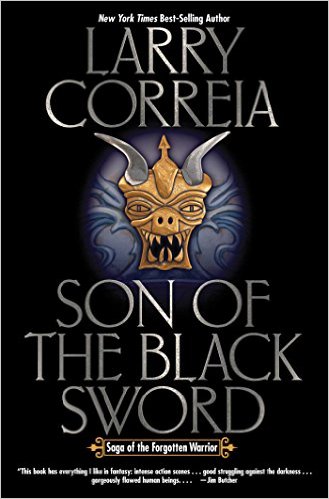

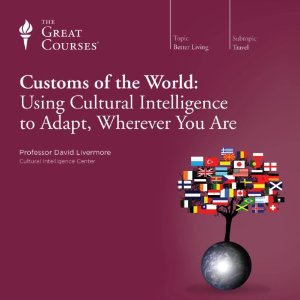 Whenever I talk characters and worldbuilding, at conventions or in classrooms, I always recommend several books. One of them actually isn’t a book at all, and it’s the only one that I mention in both contexts.
 Emails went out to all the speakers and panelists at
  Novel Ninja
Maps with Blasters & Blades
As I said a few posts ago, I finally got the push I needed to start updating this site when I agreed to be on the Blasters & Blades show and podcast. The episode was a fireside chat on maps, but as you might expect with seven nerds chatting about things it tangetted a few times. I’m not even the least bit sorry, because it was fun.
Here’s the link to the audio on Spotify, or you can watch the video below for the extra map visuals (and have a better idea of who’s talking).
Maps a a great bonus to have in fiction, but they should always be a bonus and not strictly necessary to understand the story. You don’t want to depend on readers flipping to the map whenever they get confused; actually, you don’t want them to get confused, period. Instead, you want them to flip to the map when they’re so interested in the story that they want the extra visual. When The Fellowship of the Ring mentions Mordor, the reader should ideally know approximately where it is already before seeing the map, and the map itself should be clarification rather than a primary source.
A simple map is good, like the extremely bare-bones map used for much of the Honor Harrington series by David Weber; it gives the minimum information you need and moves on from there without distracting you. Complex maps like in Tolkien’s Middle Earth setting aren’t complex because of geography, though, as most of the complexity is due to the art itself. That art isn’t there for its own sake, but rather to give the feeling of an expansive world with interesting terrain, full of amazing stories that happen just out of sight of the characters you’re actually following. Both styles help immersion in different ways: one by not getting in the way of your imagination, the other by encouraging your imagination to run a little wild for a while before drawing you back down to (Middle) Earth.
Not all maps are of geography, though, whether geographic or stellar in scope. In a story where relationships are important, like Pride and Prejudice, a character map is very helpful. A ‘murder wall’ or ‘conspiracy map’ can help visualize the connections between various clues and suspects in a mystery or thriller. A timeline is another kind of map, much more linear but full of detail that puts things in context, and can be especially important in settings that reference multiple different calendars, or as a histomap that can show the relative scope of something over time. You might have a diagram of a ship like the Enterprise from Star Trek, or a chart of magical abilities like in several different Brandon Sanderson series. (I’d love to post examples of each of these, but it would make this post rather challenging to scroll through.)
Presenting them as a visual medium, rather than a grand Wall o’ Text, helps a reader absorb the information faster and stay immersed in the story. That’s not to say that blocks of texts aren’t good bonus materials, but they’re better as something your readers can access on a wiki, as part of your Patreon, in your newsletter, or (if you’re really successful) as part of a supplemental behind-the-scenes/about-the-world book that your dedicated fans will snap up, such as The Dragonlover’s Guide to Pern, or the hard-to-find (but I have a copy!) Atlas of the Forgotten Realms.
(Yes, the latter is a D&D campaign setting, so arguably its nature is supplemental materials to begin with, but that particular volume was intended as a supplement to the novels rather than the game. You know, back when those novels were good. Hmm, I should do a blog post on the early Realms materials.)
If your map, whatever it is, has a significant amount of information on it that isn’t relevant to either the story or the map, then you’ve probably included too much. By ‘relevant to the map,’ I mean that there are plenty of map elements that aren’t necessary to the plot but put the map itself in better context by pointing out certain landmarks or making the world feel larger. Your story might mention a particular country but not mention its capital; but if you mention the capitals of two other countries and mark them on your map, you should probably mark the capital of the third, too. However, if you’re detailing a map and the action only takes place in one small corner, your map may be too large; one exception is that if the next few books will go there, putting the larger map in for context might be important.
Conversely, as the series expands, it’s necessary to update the map some more to include places mentioned so far. While I praised the original Honor Harrington map for its simplicity, the way it remained static for so long despite so many star systems being introduced was a detriment until it was finally updated.
There are also in-character, in-world maps that can be very useful in other ways, and we discussed those in the episode above. Check it out, but you might want to grab a drink and a snack first because it’s over an hour long.
Share this: