Latest Entries »

Ant-Man

Ant-Man_posterSadly, I haven’t had much time for blogging lately (at least about writing); but I can’t pass up a review of Ant-Man. Particularly since so many of you enjoy me writing about the Marvel franchise.

I went to see Ant-Man last night at the Alamo Drafthouse, because who can pass up the chance to watch superhero films while eating fried mozzarella and hot wings, washed down with an alcoholic root beer? All movie theaters should be restaurant theaters.

Anyway, it was a good experience. The service was prompt and good as always, and the movie was decent. Yes, decent; not incredible, not outstanding. Decent.

As I said before, I expected this movie to disappoint me by comparison to the others. On a scale of Marvel films, this is the third-worst, beating out Thor: The Dark World and Incredible Hulk, though Dark World had better visuals. That may sound disappointing, but remember what I said before: a bad Marvel movie is, so far, better than an average movie.

Spoiler Warning View full article »

Using Short Sentences

Power of WordsEvery so often, I come across an author trying to use short sentences and paragraph-fragments. Sometimes this author is one of my clients, and therefore hasn’t had the benefit of a good line-editor yet, but sometimes this habit makes its way to print.

And what’s wrong with that? After all, we speak in short sentences in real life. We don’t use academic grammar that has us continuing for several lines in the same thought, sometimes separated into more manageable chunks using semicolons; no, when people speak normally, they speak in fragments, rather than continuing on and on like this sentence, as if commas were going out of style.

Well, like with any part of writing, it’s a matter of art rather than science. Contrary to particularly pedantic grammarians, there are a lot fewer rules to English than we teach in school. In fact, as I’ve described previously, a lot of those modern grammar rules came about because certain people were overly-enamored with Latin and Greek and objected to the idea that English had become streamlined. (As if lots of rules meant a language was somehow more dignified.) That includes stuff like “Bob and I” versus “Bob and me,” which not even the rules-conscious French language (well, the official French language; there’s an even greater difference between academic and colloquial French than with English, which is why the French look so pained when you try to speak their language) has found a problem with.

So the problem with short sentences isn’t that there’s some rule against them. It’s that, as with any art, it’s a good idea to know what your tools are used for. View full article »

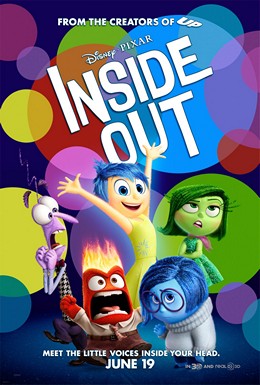
Inside Out

Inside_Out_(2015_film)_posterThis past Tuesday, because I am a highly influential member of the media because Disney was providing early access, I got to see the latest Pixar film early.

Continuing my recent trend of being supremely unimpressed by previews, I didn’t have very high expectations. They raised a bit by the time of the showing, though, because the buzz I was hearing wasn’t tinged so much by fanboyish/girlish enthusiasm as it was by an anticipation of something new and exciting. Still, I wasn’t expecting something huge. After all, the “little people running your body” concept has been used a lot. Pixar is known for being innovative, but still . . . what exactly would be new here?

Answer: everything. Holy cannoli. I think this is their best installment ever. Yes, better than my previous favorite, The Incredibles.

The basic concept seems simple. Little people controlling someone’s thoughts and actions, with the inside of the brain represented by a control room where pulling levers and pushing buttons makes stuff happen. In this version, it’s the five most basic emotions: joy, sadness, fear, anger, and disgust. They manipulate the person’s reactions to the world, collect memories, and attempt to regulate mental health.

Sounds kinda boring, doesn’t it? If it weren’t for it being Pixar, I wouldn’t have gone. But I did go, and I’m delighted. If you’re wondering if this movie is worth watching, then this is your notice. You don’t even have to read the rest of this. If you’re capable of reading these words, you are the target audience. Go watch it and thank me later.

. . . still here? Okay, I guess I can talk some more. Very mild spoilers ahead. In fact, it’s almost not worth it, but I’ll put up the cool graphic anyway.

Spoiler Warning View full article »

WorkingWell, I’ve been silent. That is, I’ve been silent on this blog. Why? Because I’m trying to devote as much effort to my main job as possible. That is, jobs, but the priority goes to the company that pays me the most for my editorial and research skills. That company has been very generous with letting me balance going to places like AwesomeCon (and three more events this year, possibly five), so I’m trying to not take that for granted.

Sadly, thanks to a flare-up with my fibromyalgia that coincided with AwesomeCon weekend, well, I’m a bit behind. But I’m taking a few moments here to talk about the convention and a few other things before I let too much time pass.  View full article »

Hugo-Award-e1422355571917Things have been very busy on my end, as I deal with a few major projects at my other job and launch a new collaborative blog site (more on that later), and also prepare for my presentations at AwesomeCon.

I’m just dashing off a quick post here to cover a bit of Hugo news: the Hugo Awards Voter Packet is out. View full article »

Editor’s Note: Welcome, once again, the lovely and talented Lori Janeski in another Novel Ninja guest post. This time, we present her debut fisk, as she decides to tackle the massive Social Fiction Warrior response to Avengers: Age of Ultron by targeting a particularly egregious essay.

I should add that Lori is Texan — and yes, even fisks are bigger in Texas. This one clocks in at over 13,000 words, enough for a good-sized novelette. Strap in, grab some popcorn, and warm up your mouse-using fingers, because you’ve got some scrolling ahead of you.

Enjoy!


If you ever want to learn how to make a complete and total idiot of yourself in front of the whole internet, just read this essay I found: “Age of Robots: How Marvel Is Killing the Popcorn Movie.”  If you’re not into being an idiot, you can go ahead and read it for its entertainment potential, because it is so utterly ridiculous, and yet trying to be completely serious and intellectual and failing miserably, that it will make you either laugh your head off, or crawl under a rock and weep for humanity.  Maybe both.

Now, the author, Sady Doyle, is allowed to have any opinion she wants.  That’s part of life.  I don’t have to agree with her, and she doesn’t have to agree with me.  But when you’re being this stupid while pretending to be smart, those of us who are not stupid have to say something to make sure you aren’t successful in convincing people that you are smart.  To borrow a quote from one of my favorite TV shows, “I respect your right to free speech, but not your stupidity.”

Omar

Normally, I try very hard to disagree with the argument, not attack the person.  This article, however, is such a piece of trash that my politeness went right out the window.  Doyle is so far beyond stupid that she has reached the status of “contemptible,” and doesn’t deserve a polite, intellectual discussion about the merits, or lack thereof, of Age of Ultron.

If you don’t want to read an angry article about how stupid someone else is, complete with the occasional vulgarity, then don’t finish reading.  Go elsewhere now.  You have been warned, so there better not be any nasty comments on the blog or Facebook about how mean I am.

Oh, and if you can’t guess, there are spoilers ahead.  I know Matthew has a spoiler graphic somewhere around here . . . aha!

Spoiler Warning

There.  If you missed that, you deserve your spoilers. View full article »

In my review of Avengers: Age of Ultron, I said that I had some speculations that I decided to cut and turn into a separate blog post. It isn’t just about predicting future plots, but there’s some of that too.

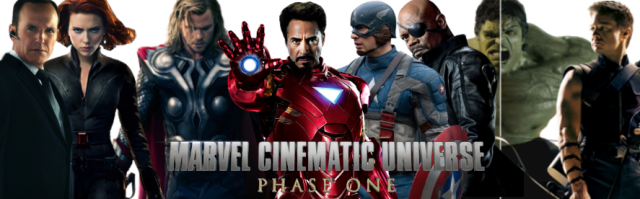
We all know that the Marvel Cinematic Universe has been a blowout success. Even the shaky installments (we’ll ignore Agents of SHIELD season one for right now) have been “bad” only in comparison to the top material. It’s also been successful at introducing these long-beloved characters to new audiences who may have known nothing about them or their stories. That’s impressive all on its own, considering the depth of the Marvel Comics storylines, many of which go back half a century now.

FmHC0Nk

It started with Iron Man, which updated Tony Stark’s story to fit a modern audience’s expectation. A great deal of the success comes from Robert Downey Jr., of course. He’s the Tom Baker of not just the role, but the whole universe; and one of the best things about it is that he’s also aware of how close he came to outright disaster due to drugs and other self-destructive behavior, and I firmly believe that this fuels the way he throws himself into the role. Not only does he know what it’s like to completely doubt yourself, but he clearly sees each day as part of a second chance on life. View full article »

It’s been a few weeks since my last post on the Hugo Awards. I haven’t had much to say, because my only concern in this matter is on the subject of writing. I’m not interested in responding to every little thing that pops up, such as news articles that repeat lies, Big Five editors who make up new lies, fans who leave one-star, one-word Amazon reviews on Hugo-nominated works . . . I’ll leave that up to others. Sure, it gets me great traffic, but I’m interested in writing, reviews, and fun stuff to share. The Hugo Awards are too serious, yet too inconsequential in the long run, to just keep harping on the same points over and over and over and . . . you get the idea.

Joker Hugo Awards

(Actually, if you want over-the-top Hugo humor, check out my friend Declan’s parody of the Sad Puppies people encountering SWATing and Worldcon. I make my own appearance in the latest installment. Apparently my house is made of Lego. I don’t find this repugnant.)

bullshit-asymmety-principleAnyway, long story short, I’m writing another Hugo post. This is because someone decided to leave a long comment on a previous post that requires a few more counterpoints than is easy to do in an answering comment. As such, I’m doing a full-on fisk, and invoking Brandolini’s Bullshit Asymmetry Principle.

The commenter’s name is pocketnaomi. As such, I’m assuming this person is a woman named Naomi, and will be addressing her that way. View full article »

Avengers: Age of Awesome

avengers-age-of-ultron-alternateWas there any doubt that Avengers: Age of Ultron would be a fun movie? Was there any doubt that the existing fanbase would love it? Was there any doubt that the movie would be a hit success? No, indeed. The only doubt was how good it would be on a scale of 6 to 11.

Rest your doubts. It’s at least a 10.9.

Note: This is not a spoiler-free review. However, unless you’ve been avoiding the trailers, you’re safe until you come to the big spoiler graphic. After that, you’ve been warned.

Superhero stories have traditionally been plot-driven. Things happen in a particular way to have a particular end, and that’s the only important thing. We all know how annoying that can be. Sometimes it’s good, sometimes it’s horrible. However, the MCU has mostly stayed true to character-driven stories. There have certainly been ones where plot mattered more (Thor: The Dark World and Agents of SHIELD season one come to mind), and others where character and plot intertwined to the point where you don’t care that a story had to go this way to set up something later, because the characters still had their day (Guardians of the Galaxy and Captain America: The Winter Soldier).

Of course, character-driven stories aren’t automatically better, because character without consistent plot is unsatisfying. Think of Iron Man 3, which was a fantastic movie from the perspective of Tony Stark’s character development, and rather sucky for the rest.

The first Avengers movie remained a shining example of a character-driven story, as Ross explained earlier this week. My biggest worry about Age of Ultron was that it might not live up to that standard. In point of fact, I think Age of Ultron actually exceeds its predecessor in that regard. While the movie actually lacks a little of the stand-up-and-cheer of the first, Age of Ultron is now a new go-to example for true character-driven stories.  View full article »

I’m just going to toss them all together today. It’s a superhero gumbo! Or a salad, if you prefer leafy things.

There’s a reason why I’m doing that. Well, two reasons. The one that has nothing to do with laziness is that Arrow, The Flash, and Agents of SHIELD all had a few things in common this week. They all dealt with stakes that have less to do with saving the world, and everything to do with their own humanity.

It’s necessary to up the stakes for a serial story, since if your characters always deal with the same problems then everything is boring. (Or it’s an American soap opera. Or a political election cycle. Or both. Hey, I live just outside DC; you can’t tell me it’s not like a soap based on The Godfather or something.) On the other hand, if you’re constantly upping the external challenges, then your character quickly becomes so powerful that threats start becoming rather ridiculous. That’s even more important if you’re like Superman and you wind up leveling Manhattan in your origin story.

I don't care if you call it "Metropolis." Who thought that an audience would find a climax involving massive buildings collapsing in New York City to be endearing?

I don’t care if you call it “Metropolis.” Who thought that an audience would find a climax involving massive buildings collapsing in New York City to be endearing? I mean, other than Zach Snyder. Anyone? Anyone? Beuller? 

The best way to solve that issue is through exploring human bonds between characters (even if some of them might not be human). As I said yesterday in my post on superhero prose, it’s important to never lose sight of human wants, needs, desires, things that an audience can understand. A massive battle is fun (well, in fiction), but it will never carry the same weight as the betrayal of a loved one. Done right, and the audience can feel a punch in the gut too.

However, from here on out, hic sunt mortiferis. That’s Latin for “If you haven’t seen this week’s superhero shows, you might want to check back later.”

Spoiler Warning View full article »