Category: Resources


When I was a child, about 11 or 12, I was unfortunately subjected to a purported film known by the alias Brother Sun, Sister Moon, which claims to be a retelling of the life of St. Francis of Assisi. I’ve encountered more historical accuracy from 20-minute children’s cartoons, and I knew hardly anything about the history of the medieval Catholic Church at the time, so that’s saying something. (Though I should add that I was living in Italy at the time, not that far from Assisi, and St. Francis was and probably still is very popular there.)

The film was pretty much a retelling with a focus on a message more appropriate to the 1960s than the 13th century. Seriously, there are so many details it got wrong, and I doubt by sincere error, that any time I’m reminded of it I get a migraine. But today I shall embrace that pain, because one error in particular stands out as an example of today’s topic.

As a young man, St. Francis participated in a battle where he was captured and had a life-altering spiritual awakening. This is depicted in the film in such a way that I suspect the director intended the audience to be on drugs, but it’s accurate in broad strokes . . . very broad strokes. Yet even as a pre-teen, the armor the young Francesco wore drove me to distraction. It’s not just that it’s not accurate 12th-century Italian armor; at that age, I couldn’t have told you what was accurate, after all. It was that I immediately saw it was inaccurate because of the human factor.

Continue reading
There’s a joke in science fiction writing communities that the advancement of science and technology makes science fiction harder. It’s a joke because SF is a genre that depends on the advancement of science and technology; but it’s also a joke because it’s kinda true. When your job is to describe the future, advancements can make it harder when fantastic things become more commonplace or turn out to be completely disproven. This can be glossed over sometimes — and in fact, many great science fiction stories depend on things both the authors and the audience know to be impossible — but for the most part good SF depends on staying both ahead of and within scientific understanding.

Sometimes, though, there’s an advancement that makes a big splash that makes it easier, not harder. Sometimes you don’t have to be more creative than the real world in order to stay ahead of it, simply because it opens up so many more possibilities than you’d had before. Creativity doesn’t lie in being completely new, but rather in recombining things in the real world.

Continue reading

Weekly Time Management

In Sandman by Neil Gaiman, Death reminds someone that “You lived what anybody else gets. You got a lifetime.”

Everyone has an equal amount of time each day. How you use it matters. And when you’re not already a full-time author, you necessarily have other things you need to work on first. Maximizing your time doesn’t mean squeezing in every possible moment of work; it means getting things done as efficiently as possible. That sometimes means your writing takes low priority, and that might not be a bad thing. For most people, writing shouldn’t be the most important thing in their lives.

But most of us — or, perhaps, most of those who stick with it — are writing because we have to. Because the stories are going through our heads and we feel like we’ll explode if we don’t find a way to get them out. If other people like the stories, so much the better. If other people will pay for the same stories . . . well, that’s just plain awesome. If other people pay for it to the extent that we can do it full time? For most of us, that’s the dream.

Getting there means developing habits and treating writing like a responsibility. That includes figuring out how much time per week you really have to devote to writing. I say per week because while a daily writing habit is all well and good, our routine is rarely identical from one day to the next. A month, on the other hand, is too long to plan out very well. A week, on the gripping hand, is just right. In fact, society already does it that way, to the point that the rhythms of one week usually mirror those of the weeks preceding and following it. Lean into that by creating a weekly time budget to plan out your writing goals.

Continue reading

Lately, I’ve been running into authors who don’t know about this book, much less its ‘sequels,’ and it’s more than worth doing a quick post on the topic. I can state without any reservation that if you do not have a copy of The Emotional Thesaurus, you are cheating yourself. There is no other single book that you can buy that will help your writing more; and yes, that includes that other book you were just thinking of, whatever it was.

The Emotional Thesaurus is a book that does exactly what it sounds like, only more so. It gives you synonyms for different emotional states, which by itself is extraordinarily useful. How many times have you had to stop to figure out how to describe what a character was feeling? But it goes far, far deeper, giving you body language, internal effects, and behavior associated with each emotion.

Continue reading

Unless you’re so far under a rock that you’re not even reading this blog in the first place, you’ve heard that a double strike of writers and actors has resulted in the effective shutdown of the movie and TV industry in the United States. This of course affects more than just writers and actors, as well as more than just US citizens; lots of people other than actors and writers work in these industries, and a staggering number of people will be indirectly affected by the lack of production in the meantime. (For an idea of how interconnected everything is, I suggest reading the famous essay, “I, Pencil.”)

Continue reading

Just a quick little announcement at the request of a friend.

Years ago, Steve Diamond decided to pitch a special edition product to his friend (and now podcast co-host and coauthor), Larry Correia. Larry has a particularly awesome series, which currently consists of a trilogy and some short stories, known as The Grimnoir Chronicles. The elevator pitch for that one is X-Men set in an alternate history 1930s. It’s historical fantasy where the magic operates like superpowers, with everyone who has magic having an innate ability for one particular kind of magic (though you find out that limitation isn’t all it appears to be). It’s an absolutely fantastic story in a high-action noir setting with an unforgettable cast of characters.

Well, Steve wanted to publish a special-edition, limited run version of the trilogy. He sourced extremely high-quality paper, got some awesome covers from the European editions not released in the US, and even got fancy cases to protect each novel. I even had a minor hand in helping to confirm the Japanese lettering was accurate, because I was working a few blocks from the Japanese consulate in DC at the time (which means that if there’s a problem with it after all, it’s my fault, not Steve’s).

Continue reading

I got wiped out by illness last week, but a large number of you wanted another post on ChatGPT, specifically on the ‘idea winnowing’ I mentioned in my last post. (And if you missed the first post, explaining what ChatGPT is and how it works, click this shiny and well-crafted link.)


Just to recap: you’ll see a lot of people referencing ChatGPT as a tool for idea generation. That’s using it the wrong way. Ideas are a dime a dozen. You already have too many of them buzzing around your head; that’s why you feel like you can’t come up with anything, because nothing is standing out. Instead, ChatGPT can be used to winnow that mess down to something manageable.

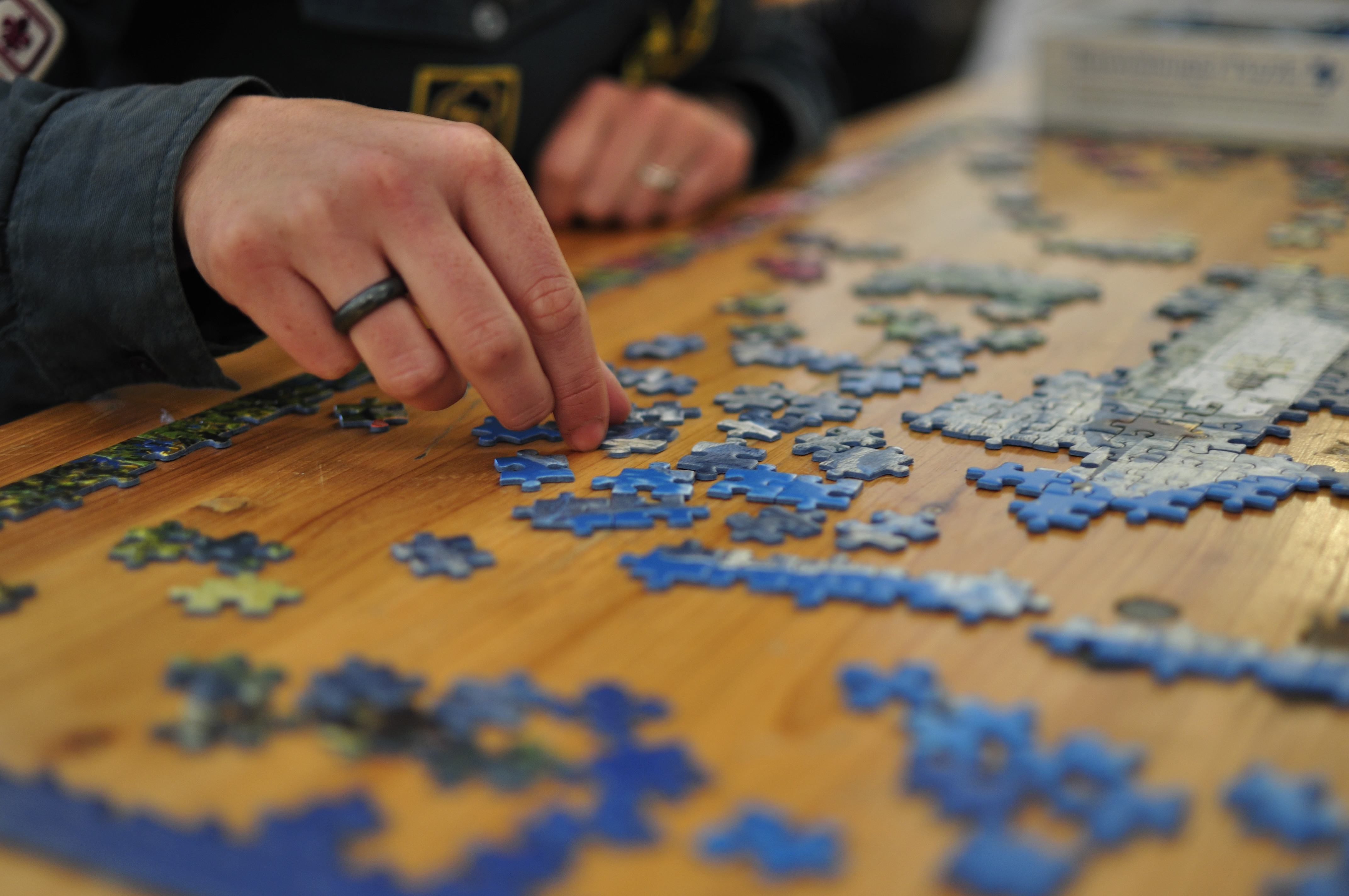
We do this just as we would without ChatGPT: by focusing on some sort of starting point. That can be something generic, or even starting by rejecting something specific — or both. Try phrasing something as “I want X, but not Y.” For example, “I want a genius scientist character, but I don’t want someone socially inept.” If you were bouncing that off of a friend, he or she might say, “Like Tony Stark?” which then gives you an opportunity to narrow it down, such as by saying “Yes, but not arrogant. Charming, but not full of himself” or maybe “No, more like someone Robin Williams might have played. A joker who doesn’t seem to take things seriously, but actually does.” That’s how idea winnowing works. Like putting together a puzzle, you start with an edge and then explore around to find pieces that can fit.

Continue reading

Last time, I covered what ChatGPT is, what it isn’t, and some things to keep in mind if you choose to use it to help your fiction. Now we’re going to get into how to use it, or other machine learning programs, to aid your fiction. Though, first, I’m going to try to underscore some of the caution I tried to instill in the last post: do not mistake ChatGPT for an unbiased assistant, talking encyclopedia, or genius author.


ChatGPT is Your Tool, Not Your Coauthor

As I said last time, ChatGPT is a particular tool. On his WriterDojo podcast, Larry Correia frequently describes elements of writing as “another tool in your toolbox,” meaning that you don’t have one tool for all jobs, and not all jobs require all of your tools. It also means you should put in the effort to understand the contents of your toolbox; you can technically split a log with a hammer, but that doesn’t make it a saw.

Continue reading

These days, using AI for anything can be controversial, but even more so for creative endeavors. Is it laziness? Will it ruin your book? Is AI going to reduce human artistry to the level of cottage industry?

At the risk of spoilers, I’m not anti-use-of-AI for your writing, but it is a complicated topic that will require multiple blog posts. For now, to figure out if ChatGPT is useful or not, we first have to define what it is, what it is not, and what legal challenges there might be in using AI-generated content.

Continue reading

Longtime readers of this blog (not to mention those who know me on other forms of social media) are no doubt aware of my addiction to learning new stuff. Well, okay, maybe not any new things; I tend to stay away from celebrity gossip, sportsball statistics (to the endless disappointment of my lovely wife), and reality contest shows that don’t involve Gordon Ramsey.

But if there’s a book that combines science, technology, history, and writing prompts, I’m all over it. That’s at the top of my reading list. There’s no way I’d buy the book on a sale and then let it languish in my to-read pile for five years.

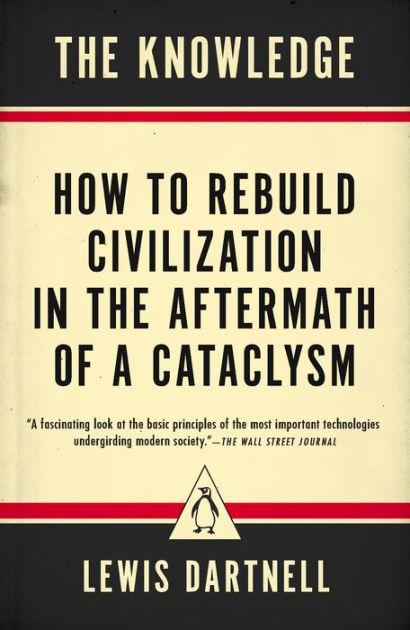
. . . okay, that’s what actually happened with The Knowledge. And yet, before I finished it, it was already one of my favorite books of all time, and at the top of my list of recommendations for anyone writing SF&F — and possibly even as a textbook in certain high school or higher education classes. It’s the best single source for teaching the history of science and technology I’ve ever seen, and it does so from the engaging and entertaining perspective of “Civilization has collapsed; what now?”

Continue reading