Tag Archive: Horror


Interview with Steve Diamond

This blog gives my perspective as an editor, but for once I had the chance to get someone else’s perspective. This week, I was able to ask Steve Diamond, author of Residue and Parasite (among others I haven’t yet reviewed) about his writing career, the nature of horror, and some advice on rewrites.

For those who don’t know him as the popular writing podcast the WriterDojo, Steve Diamond is an accountant, a former professional reviewer and bookseller, publisher of special editions, brisket connoisseur, and sworn enemy of the eldritch selachimorphs that have lurked in the depths of the oceans for millions of years. In fact, he goes into the latter in the excellent early episode of the above-mentioned podcast, Season One, Episode Twelve, “Horror” — an episode quite relevant to today’s post! If you’ve never listened to it, go ahead. This post will still be here when you get back.

Links may contain affiliate tags.


Novel Ninja: How would you describe yourself as an author?

Steve Diamond: Man, that’s a tough one. I think I try to be an entertainer. I’m not that guy that agonizes over every sentence. I don’t think I’ll ever be the guy that people call “literary,” and that’s fine by me. My only goal is to entertain… to have loftier goals than that feels hyper selfish and prideful to me.

Now after the entertainment factor, I’d say I’m rather mercenary. I’ll write whatever I’m paid to write. Maybe that’s straight-up Lovecraftian fiction, a Winnie the Pooh story (thanks public domain!), giant robots, or even a spy-thriller. I’ll write whatever I’m asked (and paid) to write. The great thing about this method is that I get to write all sorts of different things, and that keeps my stories fresh. It also helps me practice, which I think shows in my fiction.

Continue reading
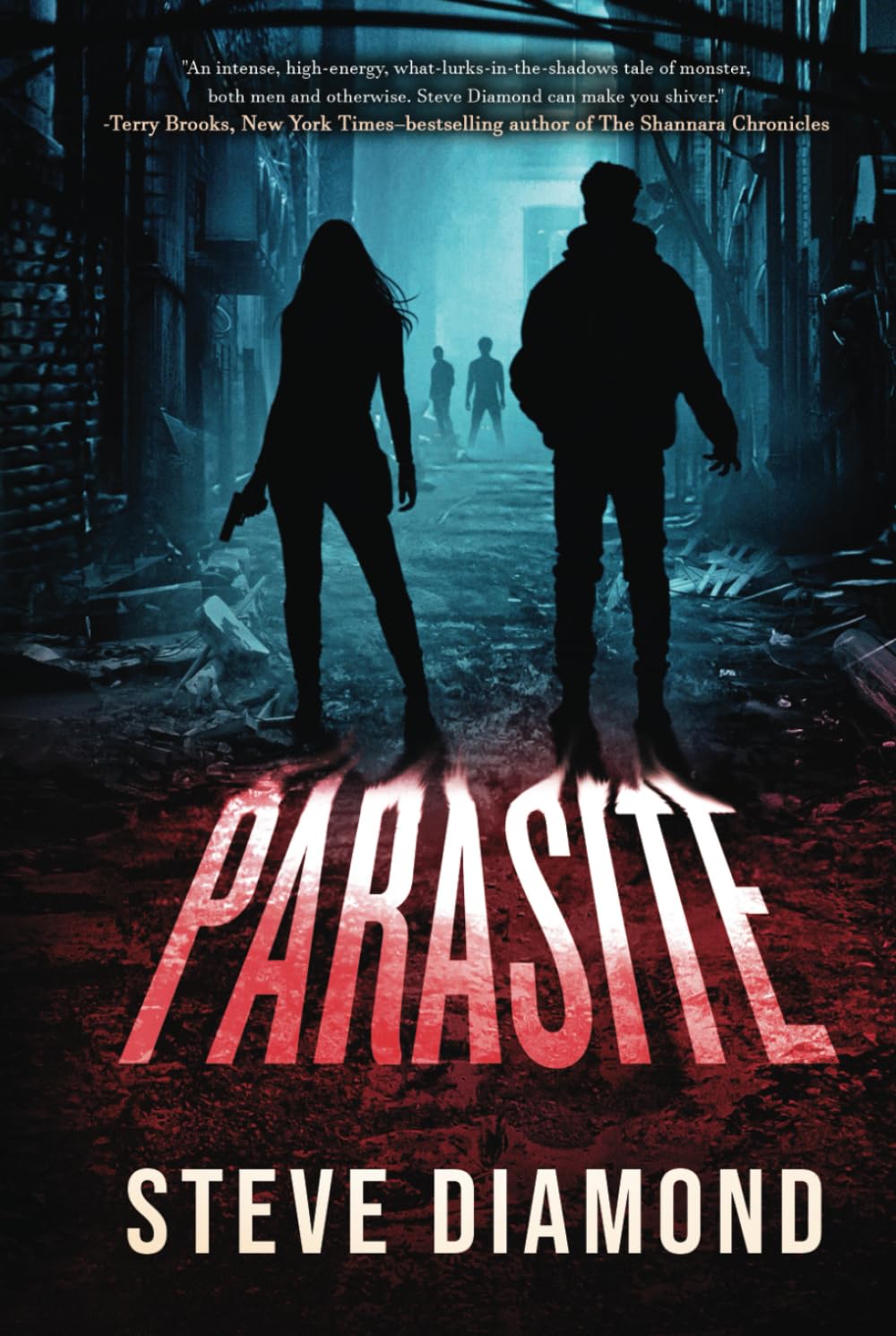
Parasite is the sequel to Residue, which I reviewed previously. After the events of the last book, Jack Bishop has been relocated to Sacramento as part of an elaborate game of evil-mastermind chess between two genetic research firms, one of which is holding his father prisoner, and both are attempting to control Jack.

I wasn’t entirely sure what to expect from the sequel. Obviously, I expected more of the same blend of urban fantasy, urban sci-fi, and Diamond’s brand of action-horror; but the back-cover description showed things escalating far beyond what I thought the series was going for. Turns out that was deliberate. The first novel was effectively a stand-alone, almost entirely self-contained, with just a few loose threads intended to lead into a sequel. Another mystery, another secret investigation, another delightful Thin Man-esque back-and-forth between Jack and his mind-reading, gun-toting girlfriend Alex.

Continue reading

I do not typically enjoy horror stories.

It’s been that way for a long time. Movies and novels alike; I just haven’t enjoyed horror. I don’t edit it either, because I don’t understand it well enough as a genre to give someone an acceptable return on their money. To edit something properly, you have to understand its context and audience; and to do that, you have to enjoy stories like it. Never go to someone who doesn’t enjoy your kind of story.

Oh, I’ve enjoyed an occasional entry in the genre, most notably Dan Wells’ I Am Not a Serial Killer (which was made into a very good low-budget movie, which can be enjoyed on its own even though the book is better); and I greatly appreciated the explanation of horror that Steve Diamond gave way back at the start of the WriterDojo podcast (in their thirteenth episode, appropriately enough). But overall the genre just didn’t speak to me.

Which means, despite getting to know Steve Diamond (online and for a brief meeting in person), I have had absolutely no interest in reading his debut novel, Residue, because it’s primarily supernatural horror. Now, though, after many years, I finally felt like I owed it to him to at least try the book. So when the book was re-released with an audio edition, I bought it and started listening.

Continue reading

Highs and Lows

You may have heard of the phrases “high fantasy” and “low fantasy.” Or perhaps you haven’t; while they’re used very commonly in an academic sense, they aren’t as common outside those circles. As is so often the case, this leads to some confusion in the definitions. And so I decided to give you a quick overview of the topic. That’s what this blog is for, after all! Continue reading